
Giant Squid has been carrying the Journey torch with pride for years now. This makes sense; after all, the studio is led by original art director Matt Nava. Alongside a small team of developers, Giant Squid has released the underwater adventure Abzu and the more fast-paced The Pathless. Now, the group’s upcoming project is shaping up to be a harmonious mix of all of these ideas and concepts.
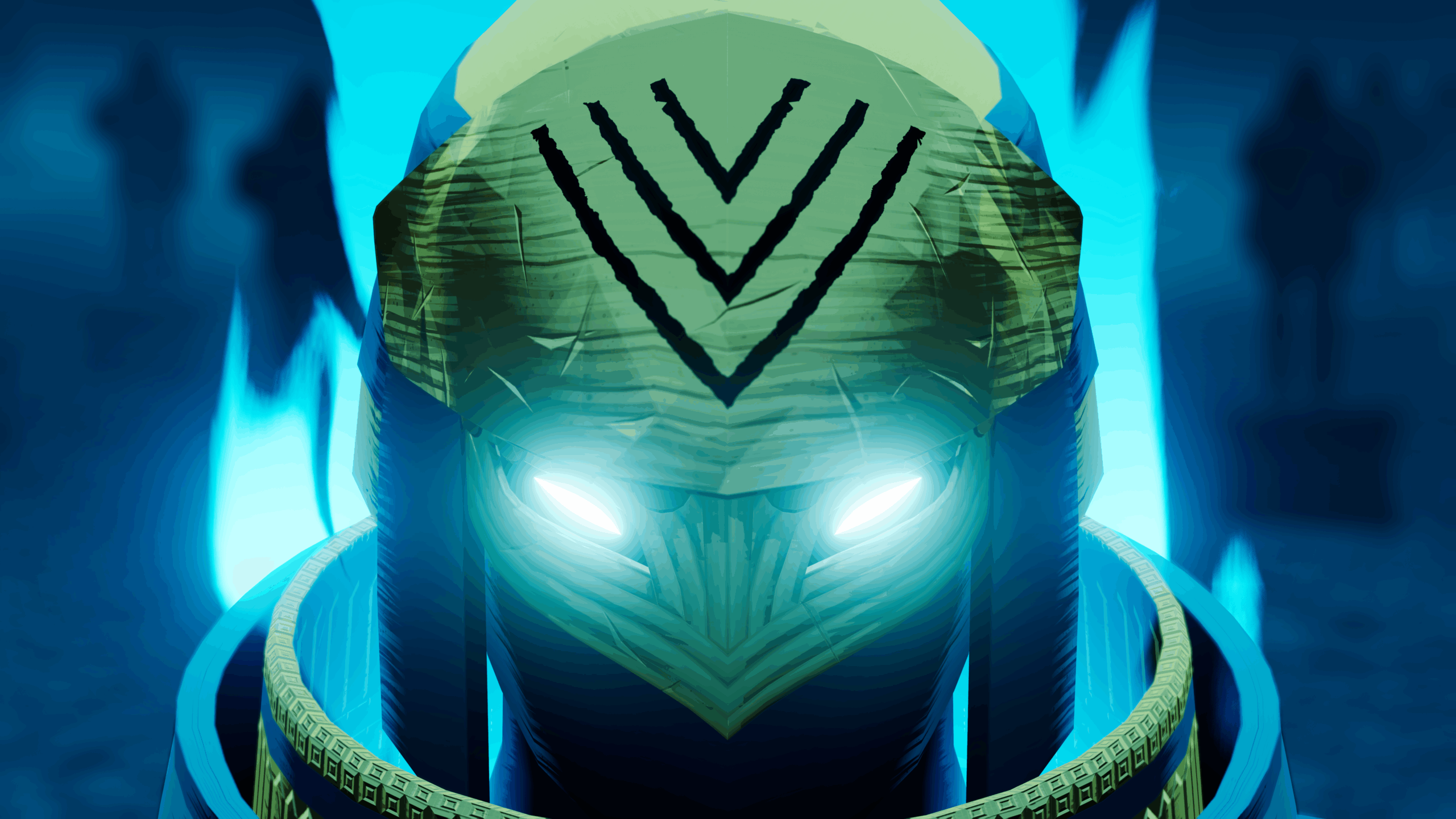
Sword of the Sea features a silent protagonist called the Wraith, who’s tasked with restoring a lost ocean across a vast, desolate desert. The main gimmick is immediately apparent: Rather than running or swimming, you control a high speed Hoversword, its movement inspired by skateboarding and snowboarding.
During a hands-on demo at Summer Game Fest, the snappiness was present from the very beginning. The board’s movement is fluid on both water and sand, with waves periodically forming on the latter to make way for jumps to gain momentum and perform tricks in mid-air. As I progressed through the loose objectives (there’s no dialogue nor in-your-face UI markers), I encountered a recurring NPC who taught me new tricks in exchange for an in-game currency gathered from the environment, which seems like the ideal progression path for this game.

Throughout a 45-minute long session, I got to witness an array of activities showcased by a gorgeous art style and a meditative soundtrack as pairings. Every time you complete a puzzle room, usually involving reaching certain objects inside ruins, the environment changes and gets filled with water, giving place to waves, fishes, and a striking blue tone.
Level design seems to take your board to heart, with environments being quite big and offering plenty of room and surfaces to perform wall rides and do all sorts of tricks on halfpipes and ramps.
This out-of-bounds approach also gives place to exploring off the beaten path. In the demo, my main objective was to open a gate, which was locked by two contraptions on each side. Each of them have a massive chain attached that gently indicated where to go. Along the way, however, I got sidetracked with smaller objectives, such as a puzzle room that unveiled ancient engravings on a wall, unveiling some details about the lore of the world, as well as a challenge “park” that tasked me with performing tricks to break a existing score record under a limited time.

The contestant juxtaposition between the clear influences of Journey against the fast-paced nature of riding the board feels like a mix that shouldn’t work well together, but it’s far from the case. It’s an intriguing way of adding expression to a game which its foundational staples relied on few visual cues, and a more reserved nature in terms of movement.
2025 in particular is quite the landscape for a game like Sword of the Sea, pit against the likes of Tony Hawk’s Pro Skater 3 + 4 and Skate Story. The first warped around a cultural time capsule of big real-life names, licensed music tracks, and Taco Bell ads. Meanwhile, Skate Story feels both closer and antagonistic to Sword of the Sea, carrying an independent sentiment and desire to present a world that is shaped by the player’s ability to skateboard while also being a game about a demon made out of glass, with a more aggressive pace infusing the experience.
In contrast, Sword of the Sea is shaping up to be a familiar face with some new tricks up its sleeve, quite literally. Before the demo, I thought the game didn’t offer much to break through the noise, my main concern being that it would end up sticking too close to its predecessors. Now, I’m hoping that it’s allowed to soar and achieve its juxtaposition with grace.


