
“What good are these character designs if there’s nothing compelling for me to do with them,” I thought for the 8th time trying to play through a traditional Pokémon RPG back in October.
Though the Legends branch of the franchise introduced elements that got me to stick around a bit longer than your average X & Y (the algebraic variables, silly) Pokémon game, I found myself back on a familiar treadmill with both Arceus and Z-A.
This is going to sound alarmingly PETA-brained of me, but hang on. I’ve never quite understood the appeal of zapping critters into tiny prisons and bashing them into each other like action figures. I don’t get it. I never have. I was of a perfectly acceptable age to get into Pokémon, but I didn’t. I was late to RPGs and by the time I was tinkering with the files of Final Fantasy VIII‘s PC port to get the glitched horizontal lines off my shitty desktop monitor, the moment for Pokémon had passed.
Once I was an adult and had the disposable income to take a flyer on Pokémon Let’s Go, Eevee!, it became obvious that The Pokémon Company and Game Freak realized they could stick with the same formula and still get their core audience in the door. Hey, it’s good work if you can get it!

Since I have no nostalgia for the brand, the arcane nature of the series is perplexing to me. Nintendo’s other major IP have evolved in various meaningful ways, so why hasn’t Pokémon? Add to this the ongoing frustration that despite world-class character designs, the way we engage with these characters in these games is as flat as a Game Boy cartridge.
So why have I sunk nearly $400 into the Pokémon series if I think it’s stuck in the worst parts of the past? I think I believe in the good nature of the overall conceit. I love little guys and I love the idea of hanging out with little guys. My imagination stretches out beyond the constraints of the mainline, combat-focused games and into territory only partially occupied by minigames, animated series, films, and game spin-offs. I’ve still never found my perfect expression of this promise, yet I hoped that Pokémon Pokopia might finally satisfy this frustratingly simple idea.
Beyond my initial horror at inhabiting a Ditto mimicking its lost human trainer, I was ultimately moved by the choice. Then the game introduces you to the barren landscape reminiscent of West Texas after a lengthy drought. Then the game asks you to begin restoring the earth, at least to provide a habitat for Pokémon but against a backdrop that it could bring the humans back into the fold. This is spoken almost like a wish upon a shooting star on a clear West Texas night.
It is a wallop of an opening act.

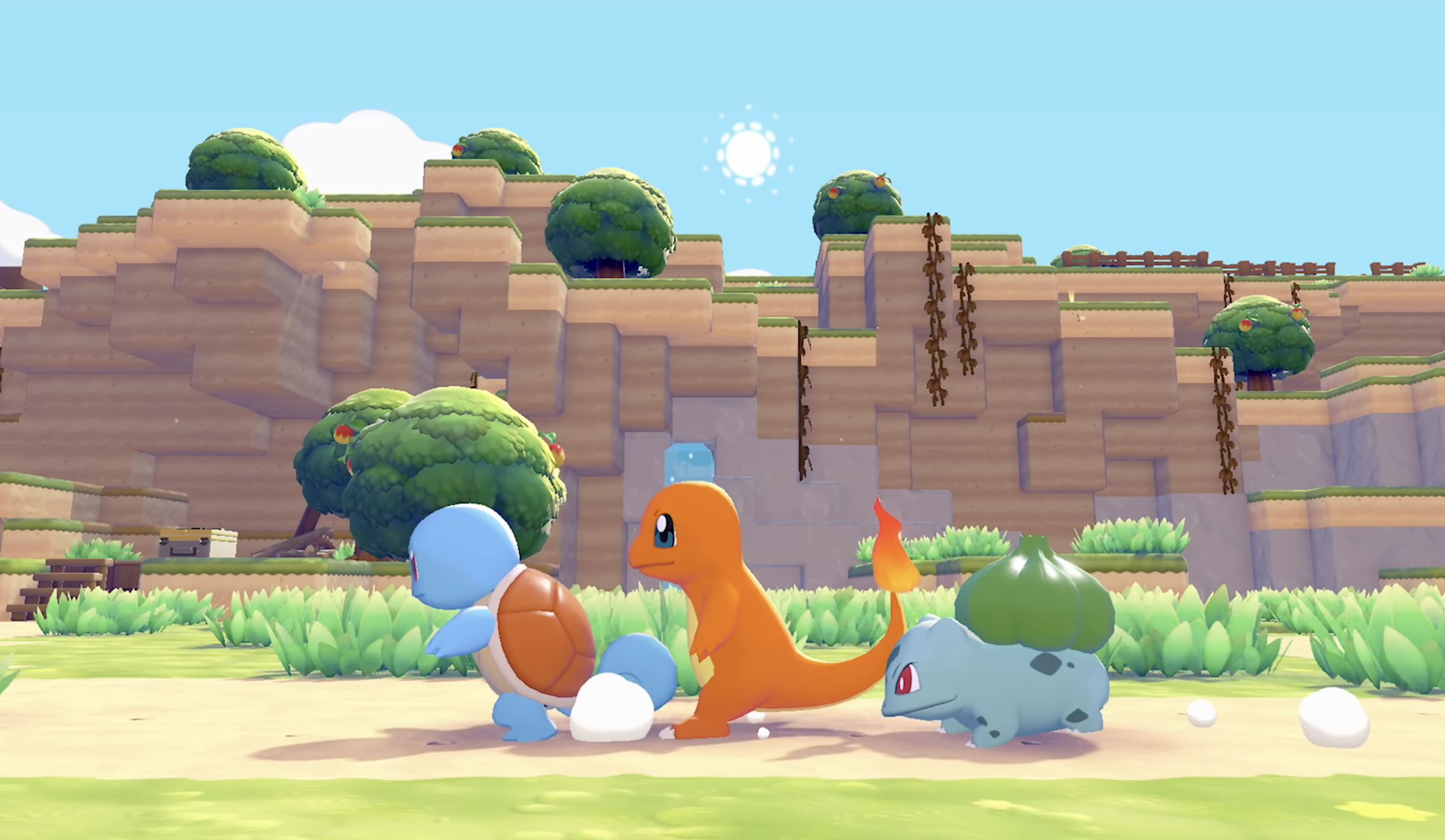
Before I could even quite digest this sequence, I used Squirtle’s abilities to create enough tall grass for Bulbasaur to emerge. Then, using Bulbasaur’s abilities, create the conditions to introduce the third original 1st generation starter, Charmander, out from hiding. As I learned how Charmander’s abilities could aid in my new project, I witnessed Squirtle and Bulbasaur, elated by their reunion, chasing each other through the new green meadow I had nourished.
Later, Bulbasaur found me to say he was sleepy but had no place to rest. I used my growing set of skills to make him a straw bed, which he used almost immediately by curling up and falling asleep.
I love this. I really, really love this.
I’ve witnessed no fewer than eight other moments in my early hours playing Pokopia that made me deeply emotional. I’m not particularly resistant to or embarrassed by my sensitive nature, but games very rarely pass through that gate.

Koei Tecmo’s Omega Force already proved their might with the sublime Dragon Quest Builders 2, which improved upon the original Square-Enix game while providing quality of life upgrades and depth that compared favorably to other sandbox games in the genre. They’ve done the same with Pokopia compared to Animal Crossing: New Horizons (despite its own sorely needed quality of life improvements found in the recent major patch) and games like Viva Piñata. This smooth and sweet mix of smartly-tuned gameplay and effortless, organic moments of delight between Pokémon is profoundly enjoyable.
And it’s so simple, right? Obviously, Omega Force deserves all the credit in the world for executing a lovely concept, but it also lays bare just how little the entire series has played in this space with intention. I finally “get” Pokémon. It only took thirty years and the persistent belief that this was within the heart of the series the entire time.


